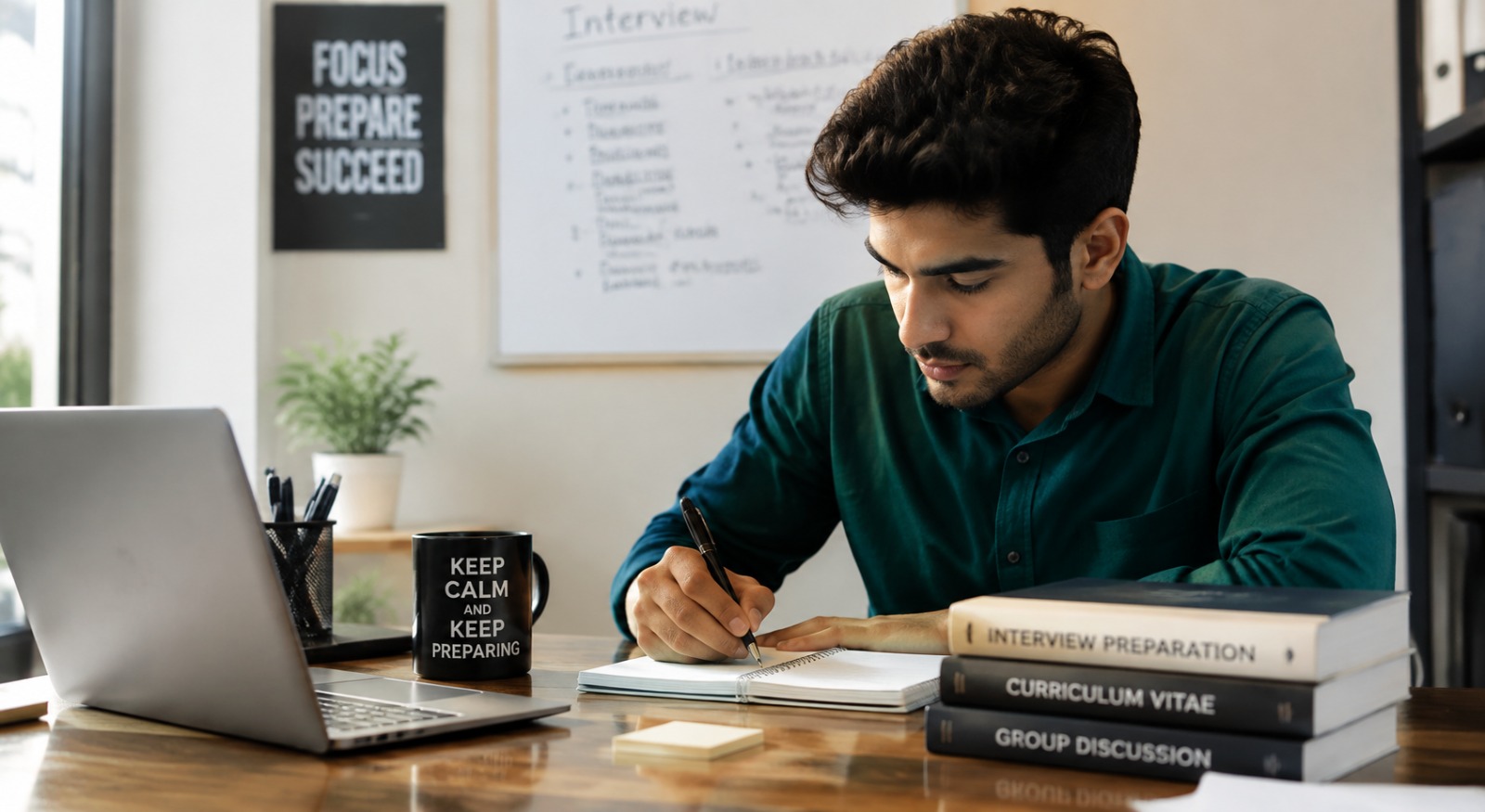
Quick answer: The best interview preparation is not memorising perfect answers. It is understanding the role, practising how you communicate and preparing real examples from your experience. Candidates who perform well usually sound clear, confident and natural rather than rehearsed.
Many people spend hours searching for “top interview questions” and memorising answers from the internet. The problem is that interviews rarely go exactly according to a script.
What do interviewers actually look for?
The exact requirements depend on the job, but most interviewers are trying to understand whether you can do the work and fit professionally into the organisation.
They may assess:
- Communication
- Confidence
- Relevant skills
- Problem-solving ability
- Professional behaviour
- Knowledge of the role
- Motivation
- Ability to handle situations
Practical consequence: you do not need to know every possible interview question. You need to be prepared to explain who you are, what you can do and why you are suitable for the role.
How should you prepare before an interview?
Start by understanding the job description properly.
Read the responsibilities and identify the skills the employer is looking for. Then think about examples from your education, previous work, internships or personal projects that demonstrate those skills.
You should also research the company before the interview.
Understand:
- What the company does
- Its products or services
- The role you are applying for
- Basic information about the industry
- Why you want to work there
This preparation helps you give more relevant answers.
Should you memorise interview answers?
Not completely.
Memorising every word can make your answers sound unnatural. If the interviewer changes the question slightly, you may also struggle to respond.
Instead, prepare the main points you want to communicate.
For example, for “Tell me about yourself,” know:
- Your background
- Your education or experience
- Relevant skills
- Your career interests
- Why you are applying
Then explain these points naturally.
How important is practising before an interview?
Practice can make a significant difference.
You may know the answer in your mind but struggle to explain it clearly when sitting in front of an interviewer.
Practice by:
- Speaking answers aloud
- Recording yourself
- Doing mock interviews
- Practising with a friend
- Improving your eye contact and posture
The goal is not to become robotic. The goal is to become comfortable speaking about yourself.
What should you know about the job before attending?
You should understand the role you are applying for.
Many candidates make the mistake of attending an interview without properly reading the job description.
Before the interview, ask yourself:
- What will I actually be doing?
- What skills does this role require?
- Why am I suitable?
- What challenges might I face?
- Why do I want this job?
Being able to answer these questions clearly shows preparation.
What do interviewers actually assess?
Your qualifications may help you get shortlisted. Your interview performance can determine whether you move forward.
| Stage | What is being assessed |
|---|---|
| FIRST IMPRESSION | Professional appearance, confidence and punctuality |
| INTRODUCTION | Communication and ability to explain yourself |
| ROLE QUESTIONS | Understanding of the job and relevant skills |
| SITUATIONAL QUESTIONS | Problem-solving and decision-making |
| BEHAVIOURAL QUESTIONS | Past experiences and professional behaviour |
| FINAL DISCUSSION | Motivation, interest and overall suitability |
If you have an interview coming up, you have an advantage that many candidates ignore: time to practise.
The three mistakes candidates make most often in interviews
These three mistakes appear repeatedly during interviews. The good news is that all of them can be improved with preparation.
1. Giving memorised answers
Candidates sometimes memorise answers word-for-word from the internet.
This can make them sound unnatural and can create problems when the interviewer asks a follow-up question.
Understand your answers instead of memorising a script.
2. Not researching the company
Walking into an interview without knowing what the company does can create a poor impression.
Spend some time understanding the organisation, its services and the role you want.
Even basic research can help you answer questions more confidently.
3. Speaking without giving examples
Saying “I am hardworking” or “I am a good team player” is easy.
Interviewers often want evidence.
Use examples from your studies, work, internships or projects to show how you have demonstrated a skill.
How can you answer difficult interview questions?
Stay calm and listen carefully to the question.
You do not need to answer immediately. Taking a few seconds to think is completely acceptable.
Try to:
- Understand the question.
- Think about a relevant example.
- Answer clearly.
- Keep your answer focused.
- Explain what you learned when relevant.
Clear answers are usually better than long and complicated answers.
How should you prepare your body language?
Communication is not only about words.
During an interview, pay attention to:
- Sitting posture
- Eye contact
- Facial expressions
- Hand movements
- Listening carefully
- Speaking clearly
You do not need to act differently from your natural personality. Focus on appearing attentive, professional and comfortable.
What should you do the day before an interview?
Prepare everything in advance.
Check:
- Interview location or meeting link
- Interview time
- Your documents
- Your clothing
- Your resume
- Travel time
- Basic company information
Avoid last-minute preparation where possible.
Getting enough rest can also help you feel more focused.
Frequently Asked Questions
Q: What is the best way to prepare for an interview?
A: Understand the job role, research the company, prepare examples from your experience and practise answering questions aloud.
Q: Should I memorise interview answers?
A: No. Prepare key points instead of memorising every word. This helps you sound more natural and respond better to follow-up questions.
Q: How can I improve my confidence before an interview?
A: Practice speaking aloud, participate in mock interviews and prepare thoroughly. Confidence often improves when you know what to expect.
Q: What should I say when the interviewer asks “Tell me about yourself?”
A: Briefly explain your background, education or experience, relevant skills and why you are interested in the opportunity.
Q: What is the biggest mistake in an interview?
A: One common mistake is attending without understanding the company or job role. Another is giving memorised answers without being able to explain them naturally.
Q: How many times should I practise before an interview?
A: Practise until you can explain your experience and skills comfortably without sounding like you are reading a memorised script.
Leave a Reply